The Quiet AI Revolution: Why Everything Online Suddenly Looks Real
AI content didn’t get better overnight but it crossed a line. Behind the scenes, new production workflows and cinematic AI tools are quietly making synthetic content feel real, coherent, and human.
IngestGPT
Admin
The Quiet AI Revolution: Why Everything Online Suddenly Looks Real
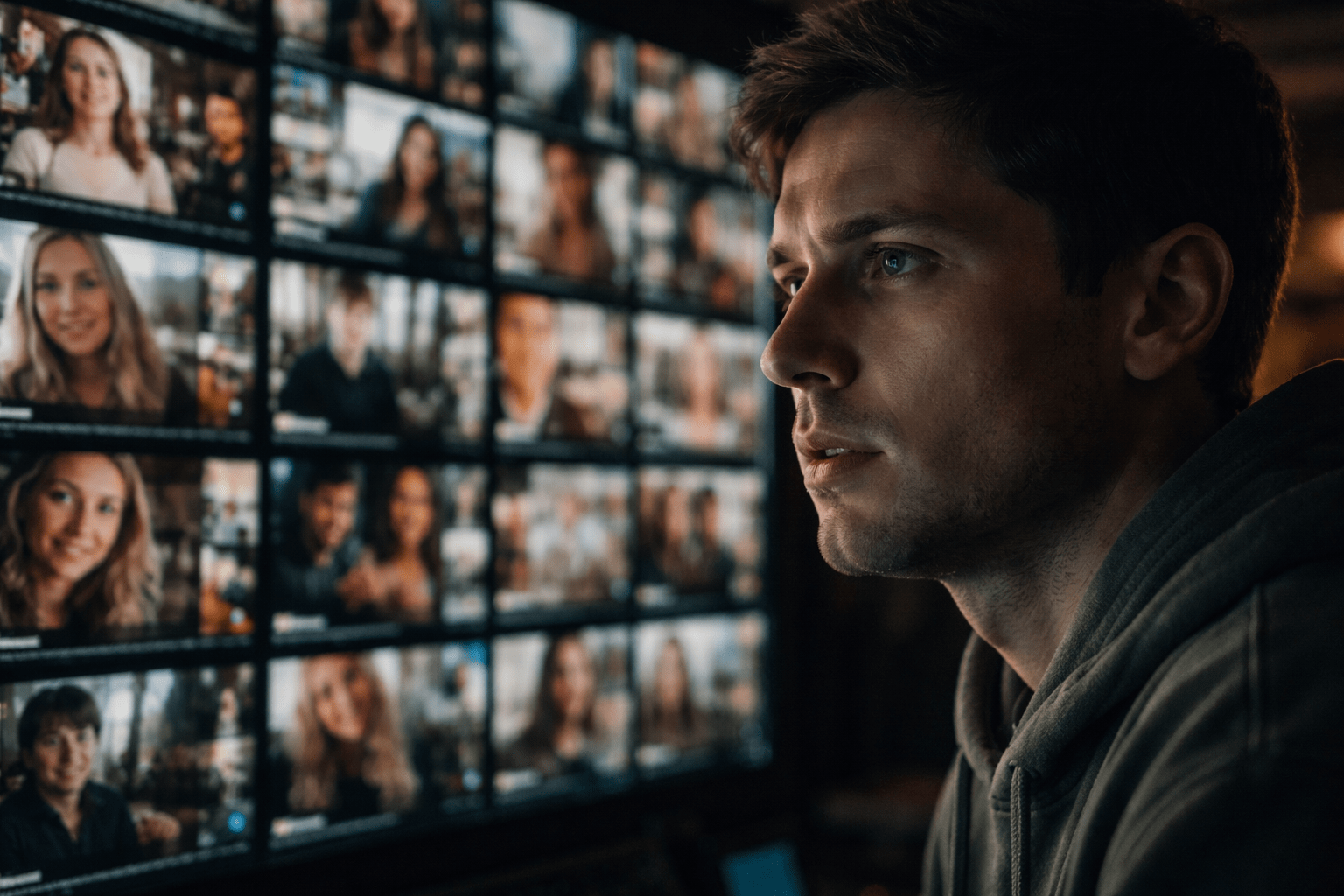
AI content has undergone a transformation that is subtle yet profound. It no longer announces its presence with tell-tale glitches or uncanny inconsistencies. Instead, it has quietly settled into the digital landscape, blending in so seamlessly that the average observer scrolls past without a second thought, without a mental red flag. This newfound invisibility is a significant shift from even a year ago, when AI content was almost instantly recognizable.
The perception that there is "less AI content out there lately" is a common misunderstanding. The reality is quite the opposite: there is more AI content than ever before. The crucial difference is that its quality has dramatically improved, making it largely unrecognizable to most people. This isn't the result of a single groundbreaking announcement or a massive model launch. Rather, it stems from a steady stream of small, incremental updates better image models, enhanced video capabilities, slight improvements in motion, more stable faces, and overall increased stability, all stacking upon each other over time.
The Subtle Shift in AI Content Recognition
In the past, AI content exhibited distinct characteristics that formed a kind of "reality filter" for internet users. Motion often felt strange, faces would subtly drift, lighting behaved oddly, and characters rarely maintained consistency from one shot to the next. These visible flaws were clear indicators that something was "off," and people learned to spot them almost instinctively, even without deep technical knowledge. However, this reality filter is now breaking down. The improvements have made these previous "tells" increasingly rare. The question is no longer whether AI has slowed down, but what specific changes have enabled this dramatic leap in realism and blending capabilities.
Beyond Model Updates: The Production Revolution
While continuous model updates are a factor, the shift extends beyond raw model quality. The market itself has evolved significantly over the last year, with the widespread emergence of AI subscription platforms and aggregators. These platforms offer bundled access to various models for images, video, text, and audio, making decent AI tools accessible to virtually anyone.
Universal access to similar models suggests that raw quality differences alone cannot fully explain the sudden jump in believability. The true revolution lies elsewhere: in the production layer. Previously, AI content often felt artificial because it was a "stitched together" process. Generating content in one tool, exporting it, moving it to another for animation or tweaking, and then exporting again—each step introduced friction. This friction inevitably left visible marks, making the content appear disjointed and artificial.
The Power of Continuity: A New Era of AI Workflows
The human brain is exceptionally adept at noticing inconsistencies. The AI content that achieves the highest level of blending today rarely relies on the flashiest models; instead, it prioritizes continuity. This means fewer handoffs between tools, fewer breaks in the creative process, and fewer moments where the illusion can fall apart. This focus on seamlessness is where tools designed specifically for creators and production teams have begun to truly stand out.
Higgsfield is one such tool that has been utilized for its ability to integrate with real-world content production workflows. The release of its new feature, Cinema Studio, directly addresses why AI content now feels so different. Notably, Higsfield is a unicorn startup from Kazakhstan, focusing on execution and rapid scaling rather than hype.
Aggregators, while useful for experimentation, often fall short when consistency, specific formats, and speed become critical for actual output. Jumping between multiple tools quickly becomes inefficient. Higsfield adopts a different approach, clearly built around production. It offers access to multiple image and video models, which are regularly updated, but its core strength lies in wrapping everything into a single, cohesive workflow.
Even seemingly minor details make a substantial difference. The ability to precisely choose generation resolution and access a wide range of aspect ratios that align with real-world use cases, rather than being forced into a single format, enhances realism. Some of these settings are not even available on the original model platforms. Such features prevent AI content from looking like mere demonstrations. With Higsfield, once an image is generated, it can be extended directly into animation within the same environment and context, maintaining the same character. This integrated approach eliminates a vast number of the "seams" that users previously learned to spot.
Cinema Studio: Anchoring Realism with Intent
Cinema Studio is built on a simple yet powerful concept: instead of starting with motion, you begin with a frame. This initial, intentional frame allows creators to focus on composition, lighting, mood, and lens feel. A strong "master image" is generated first, serving as an anchor. From this anchor, the image is then extended into a video, essentially extending a moment in time rather than animating an image in a traditional sense.
This fundamental difference is immediately apparent in the output. Motion appears grounded, perspective remains consistent, and lighting behaves as expected. Cinema Studio allows for camera movement to be defined as intent options like push, pan, dolly, handheld, orbit, and drone are available. Users can choose duration, resolution, generate multiple takes, and then curate the best results. This workflow mirrors real production processes much more closely than conventional AI prompting.
Another key factor contributing to this realism is "optical logic." Cinema Studio incorporates camera and lens profiles inspired by actual cinema gear. This anchors the visual look, ensuring proper perspective, believable depth, and eliminating the "floaty" or disconnected feel often associated with older AI video. This is where "hyper realism" subtly enters the picture, providing just enough detail and consistency for the brain to accept what it's seeing without question.
Unlocking Character Consistency and Streamlined Production
Consistency is the ultimate unlock for AI content realism. Higsfield enables users to save characters and reuse them across various shots and angles without losing their identity. This feature addresses one of the most challenging problems in AI visuals, where faces would subtly shift, proportions would drift, and expressions would reset—issues that immediately trigger mental flags for viewers. When character identity holds true, the brain relaxes, and the content simply works.
Higsfield operates on a credit-based subscription model, including a free tier. Annual plans offer discounted rates, with Pro around $17/month, Ultimate at $29/month, and Creator at roughly $149/month. These credits cover image and video generations, with top-up options available. This consolidated approach simplifies costs, as many creators often pay for multiple tools (e.g., Pika for generation and Runway for control), which can quickly add up. Higsfield integrates character continuity and cinematic camera presets directly into one workflow.
Creating a character is straightforward: users navigate to the character tab and select the sole ID character model. They upload at least 20 images of their character—either a real person or an AI character built from a small dataset created in Nano Banana Pro using different angles. A scale indicates the quality of the uploaded photos. Once the images are solid and sufficient, the character is named and generated. The system automatically creates the lore for the model, a process that not long ago required complex setups like Comfy UI and Flux Lore training, but now takes only minutes.
After character creation, users go to the images tab, select the Higsfield sole model and their character. They then pick a preset, such as an iPhone style with a 9x6 aspect ratio, and enter a prompt, for instance: "a man in a yellow t-shirt climbing onto the roof of a skyscraper."
Conclusion
The transformation of AI content from easily detectable to virtually invisible is not a slowdown, but a profound acceleration in its capabilities. This shift is driven by a combination of continuous, incremental updates to AI models and, more significantly, the maturation of the production layer. Cleaner workflows, integrated tools like Higsfield's Cinema Studio, and a strong emphasis on continuity have eradicated the visible flaws and inconsistencies that once characterized AI-generated media. By anchoring creations with intentional frames, mimicking real-world camera optics, and ensuring character identity, AI content has moved away from random generation towards deterministic, believable outcomes. The internet's reality filter has lost its grip, and AI suddenly feels too real because the seams have disappeared, allowing the content to simply blend in.
Related Articles
Essential AI Engineering Terms: LLMs, RAG, Agents, and Multimodal Models
Explore fundamental AI engineering terms like Large Language Models (LLMs), Tokenization, Vectors, Attention, Fine-tuning, RAG, Context Engineering, Agents, and Multimodal AI. Gain insights crucial for effective communication and deeper understanding in the AI space.
November 29, 2025Create Realistic Talking AI Avatars & Influencers with Consistent Results
Learn the step-by-step process to create highly realistic and consistent talking AI avatars for your brand. This guide covers generating base models with Kora Pro, creating variations with Nano Banana, and bringing them to life with advanced lip-syncing tools like VO3.1 and Enhancer
November 27, 2025What’s Better Than RAG? Exploring the Next Generation of AI
A deep dive into whether anything is better than RAG, exploring advanced AI architectures like agents, multimodal retrieval, reasoning models, and hybrid knowledge systems.
November 25, 2025