What Is a Knowledge Base in Artificial Intelligence?
This article explains what a knowledge base is in AI, how it works, why it matters, and how modern AI systems use knowledge bases for decision-making, automation, and intelligent reasoning.
IngestGPT
Admin
What Is a Knowledge Base in Artificial Intelligence?
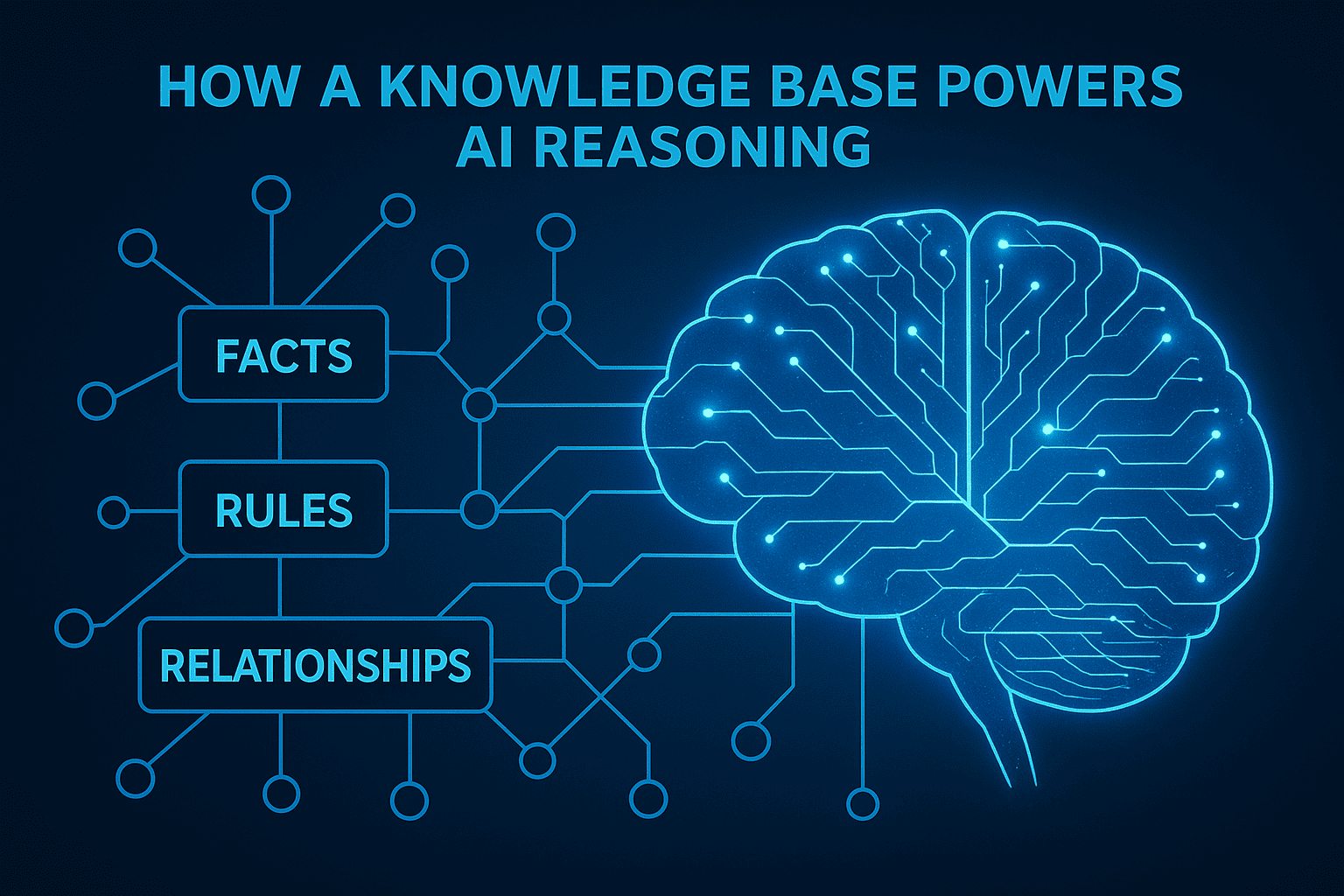
A knowledge base in artificial intelligence is a structured collection of information—facts, rules, relationships, and real-world data that an AI system uses to make decisions or solve problems. It acts like the "brain" behind many intelligent systems, helping them understand the world and reason more effectively.
In simple terms, a knowledge base stores information in a way that machines can understand, process, and use to provide answers or perform tasks.
Why Do AI Systems Need a Knowledge Base?
AI systems need more than raw data—they need context.
A knowledge base provides this context by organizing information logically. This structure allows an AI system to:
- Understand concepts and how they relate
- Make predictions
- Apply rules and logic
- Draw conclusions from available information
Any intelligent behavior—from recommending products to diagnosing issues—relies on some form of knowledge representation.
How a Knowledge Base Works
An AI knowledge base typically contains:
- Facts
These are pieces of information that the system knows to be true.
Example: A cat is a mammal.
- Rules
Rules tell the system how to use the facts.
Example: If an animal is a mammal, it is warm-blooded.
- Relationships
These define how concepts connect.
Example: Cats → have → whiskers.
Together, these elements help AI systems perform reasoning similar to human logic.
Types of Knowledge Bases in AI
Different AI applications use different types of knowledge bases depending on their purpose:
- Declarative Knowledge Bases
Store facts, statements, and relationships. Common in expert systems.
- Procedural Knowledge Bases
Store instructions or steps on how to perform tasks.
- Ontology-Based Knowledge Bases
Used in modern AI to define concepts and their relationships in a structured vocabulary—important for semantic search, chatbots, and knowledge graphs.
Where Knowledge Bases Are Used in AI
Knowledge bases play an essential role in multiple AI-powered systems:
Expert Systems
Diagnose problems in healthcare, finance, or engineering using stored rules.
Chatbots and Virtual Assistants
Use knowledge bases to answer questions consistently and accurately.
Search Engines and Knowledge Graphs
Google’s Knowledge Graph is a massive knowledge base that helps organize world information.
Decision Support Systems
Provide recommendations based on structured domain knowledge.
Knowledge Bases vs Databases: What’s the Difference?
Many people confuse knowledge bases with regular databases.
Here’s the key difference:
- A database stores raw data
- A knowledge base stores structured information with meaning and logic
Databases tell you what the data is.
Knowledge bases tell you what the data means and how to use it.
Why Knowledge Bases Matter in Modern AI
As AI evolves from simple automation to more advanced reasoning, the importance of knowledge bases increases. They:
- Improve accuracy
- Enable explainable decision-making
- Enhance natural language understanding
- Help AI behave more predictably
- Allow systems to “understand” concepts instead of just processing data
In an era where AI interacts directly with humans, the need for structured, reliable knowledge is more important than ever.
Related Articles
Essential AI Engineering Terms: LLMs, RAG, Agents, and Multimodal Models
Explore fundamental AI engineering terms like Large Language Models (LLMs), Tokenization, Vectors, Attention, Fine-tuning, RAG, Context Engineering, Agents, and Multimodal AI. Gain insights crucial for effective communication and deeper understanding in the AI space.
November 29, 2025Create Realistic Talking AI Avatars & Influencers with Consistent Results
Learn the step-by-step process to create highly realistic and consistent talking AI avatars for your brand. This guide covers generating base models with Kora Pro, creating variations with Nano Banana, and bringing them to life with advanced lip-syncing tools like VO3.1 and Enhancer
November 27, 2025What’s Better Than RAG? Exploring the Next Generation of AI
A deep dive into whether anything is better than RAG, exploring advanced AI architectures like agents, multimodal retrieval, reasoning models, and hybrid knowledge systems.
November 25, 2025